 + ADP + Pi + H+ ---> 3
  + ATP + H2O
D. ATP Synthesis
3 + ADP + Pi + H+ ---> 3 + ATP + H2O

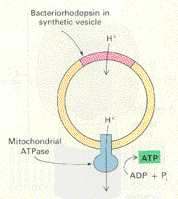
Mitchell’s Chemiosmotic Hypothesis
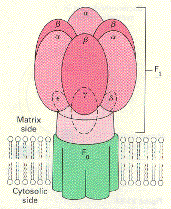
Structural Biochemistry of the F0F1 ATP Synthase
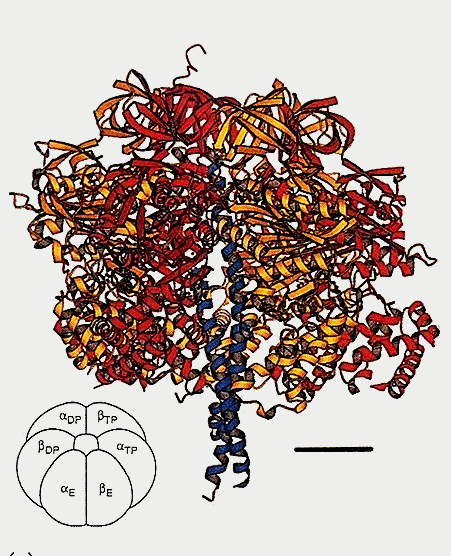
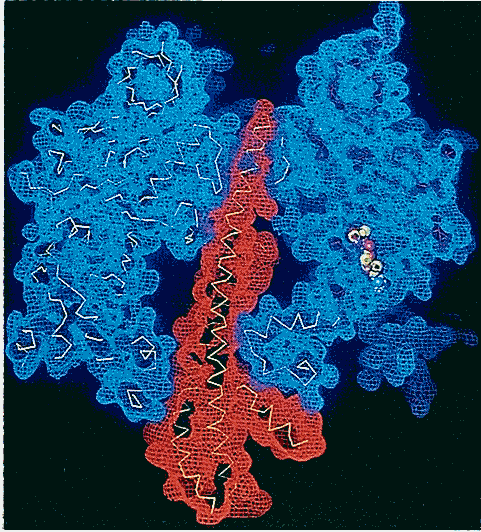
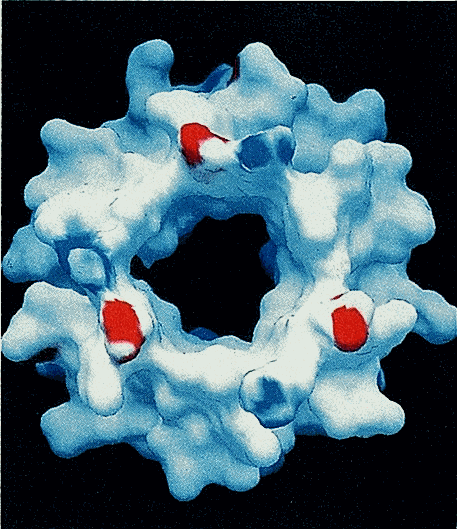
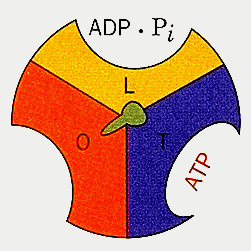
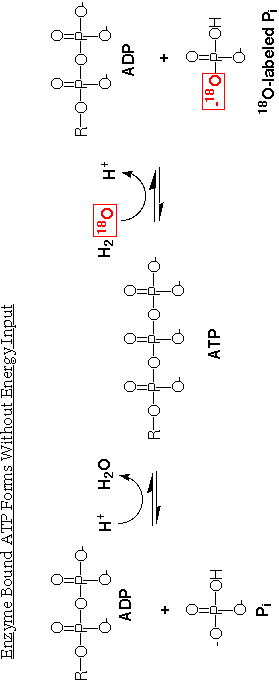
The Binding-Change Mechanism
|
Binding Free Energy |
||
|
Conformation |
{ADP + Pi + H+} |
{ATP + H2O} |
|
L state |
Negative |
Positive |
|
T state |
Negative |
Negative |
|
O state |
Positive |
Positive |


Transport of ATP Across the Inner Mitochondrial Membrane
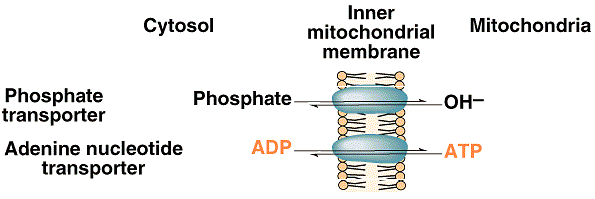
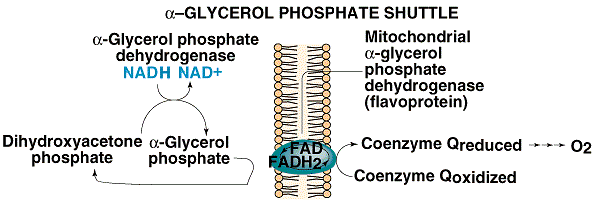
Transport of NADH

2 + 2  ---> 2 + 2
Counting ATP
To generate one mole of ATP:
F0F1 SYnthase 3 moles of
Transport of ATP 1 mole of
Each Mole of NADH in Matrix Pumps 10 = 2.5 Moles ATP
Each Mole of NADH in Cytosol Pumps 6 = 1.5 Moles ATP
Each Mole of FADH2 in Matrix Pumps 6 = 1.5 Moles ATP
For 1 Mole of Glucose:
Glycolysis:
2 Moles of ATP
2 Moles of NADH in Cytosol = 3 Moles ATP
Total: 5 Moles of ATP
Pyruvate Dehydrogenase:
2 Moles of NADH in Matrix = 5 Moles ATP
Total: 5 Moles of ATP
TCA:
2 Moles GTP
6 Moles of NADH in Matrix = 15 Moles ATP
2 Moles of FADH2 in Matrix = 3 Moles ATP
Total: 20 Moles ATP
Inhibition, Regulation and Uncoupling of Ox. Phos.
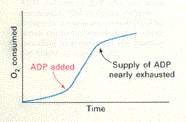
Inhibitors and Regulation:
Oligomycin => ATP Synthase
Atractyloside => Adenine Nuc. Transporter
Bongkrekic Acid
Uncoupling:
Dinitrophenol (DNP) => Inner Mit. Membrane
Thermogenin (Uncoupling Protein)
Brown Adipose Tissue
