Biochemistry 200
February 24, 1999
Peter Jackson
Controlling Chromosome Duplication and Segregation by Proteolysis
Recommended Reading: Alberts et al., Molecular Biology of the Cell, 3rd edition, chapter 17
The life of a chromosome
The cell’s physiological program is controlled in a large part by the action of gene products. The genes in turn reside on the chromosomes. Each time the cell divides, it must accurately replicate the chromosomes and then efficiently segregate the chromosomes into daughter nuclei. Other organelles in the cell must also be replicated and segregated into daughters, but the chromosomes are critical because they contain the genetic blueprint for the cell.
DNA is packaged into chromosomes by a variety of histones and non-histone proteins. Together the DNA and its associated proteins are packaged into a structure called chromatin. In interphase the chromosomes are decondensed and are more uniformly distributed within the nucleus. The DNA must replicate within the context of the chromatin. At mitosis, the nuclear envelope breaks down and the chromosomes condense on the mitotic spindle.
Cyclin-dependent kinases
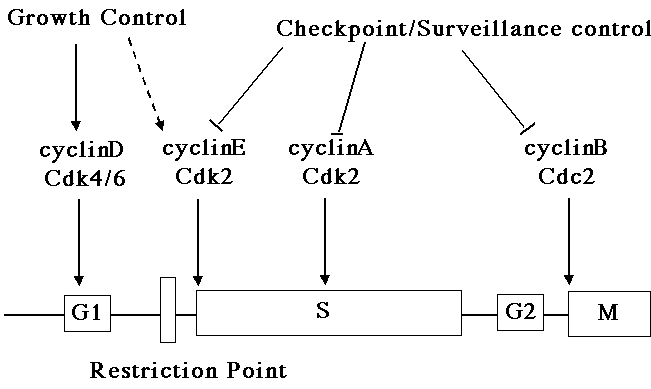
are a class of enzymes that act globally to cause DNA replication and the events of mitosis including chromosome condensation, nuclear envelope breakdown, and formation of the mitotic spindle.Cyclin-dependent kinases function by phosphorylating specific structural and regulatory proteins. These phosphorylation events lead to activation, inactivation, or proteolytic destruction of these regulatory proteins. So cyclin B/Cdc2 can phosphorylate proteins that promote assembly of the mitotic spindle, whereas cyclin E/Cdk2 can phosphorylate proteins that drive DNA replication.
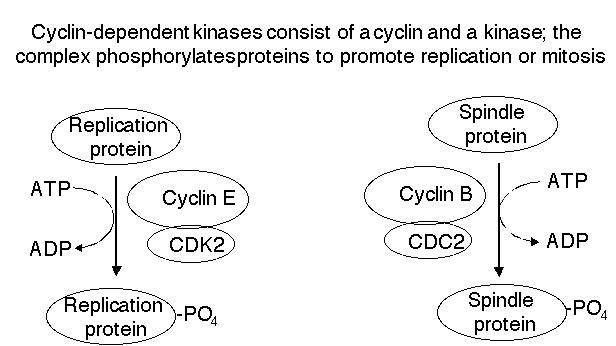
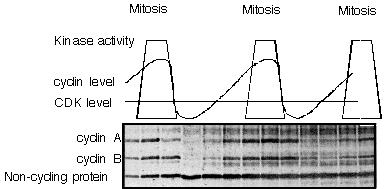
While this complex cascade of events leading to mitosis or replication is only partly understood, we do understand that the oscillation of cyclins drives the mitotic cycle of cells.
The cyclin B protein is destroyed after the cyclin B/Cdc2 kinase is activated to cause mitosis. Removing cyclin B allows return to interphase (G1).
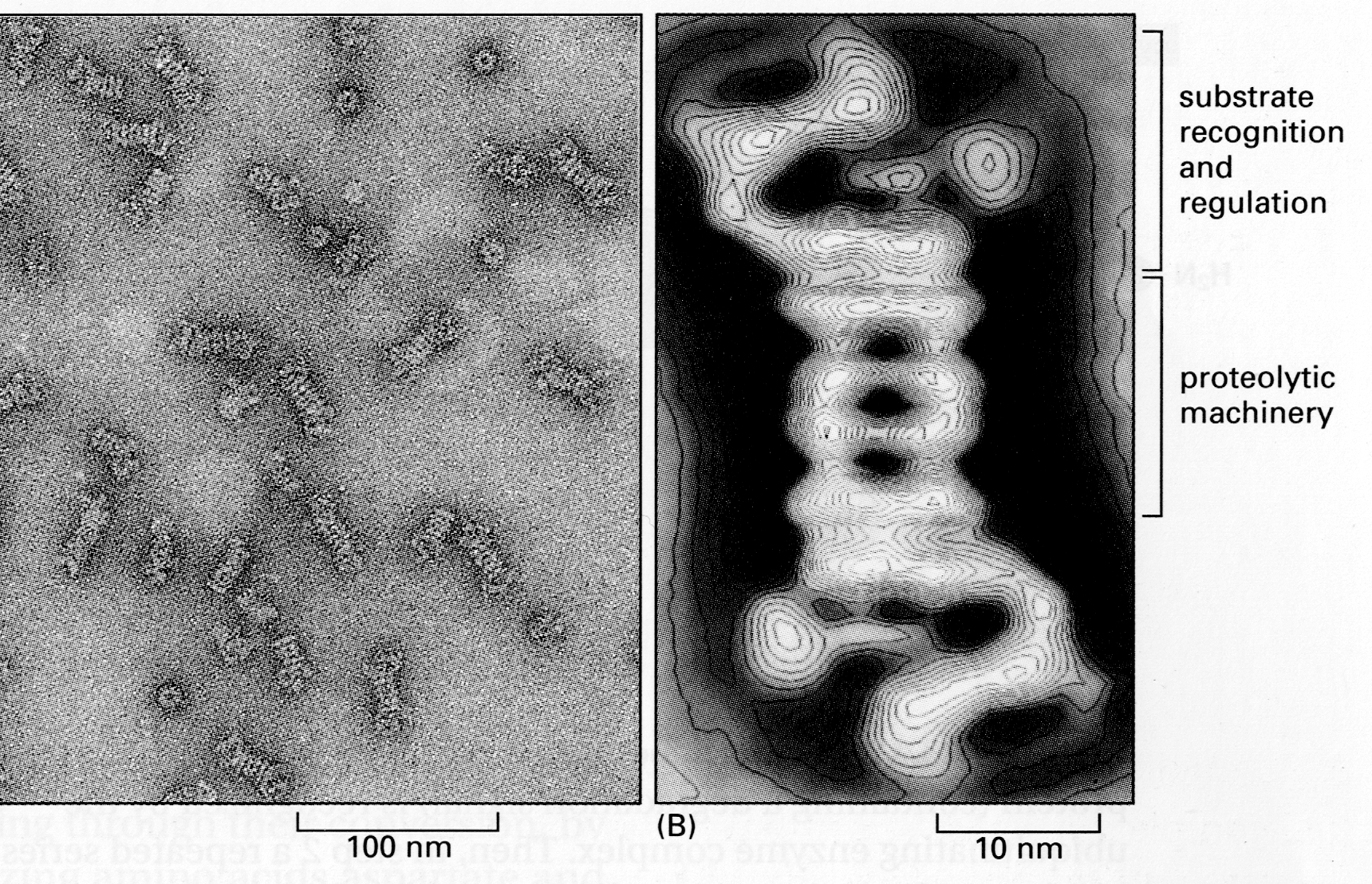
Cyclin B is destroyed by ubiquitin-dependent proteolysis. Ubiquitin a highly conserved 76 amino acid protein that is covalently added in chains to target proteins. These poly-ubiquitinated proteins are then destroyed by the 26S proteasome, a complex for proteolysis.
Ubiquitination occurs by a multistep process requiring three classes of enzymes
An E1 - A ubiquitin-activating enzyme
An E2 - A ubiquitin-conjugating enzyme
An E3 - A ubiquitin ligase
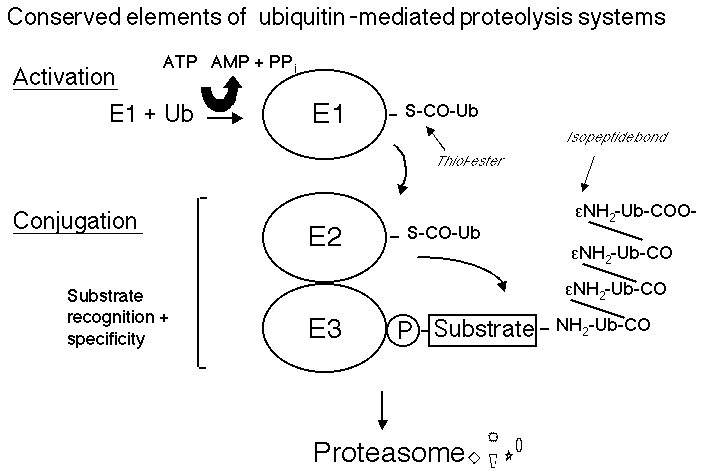
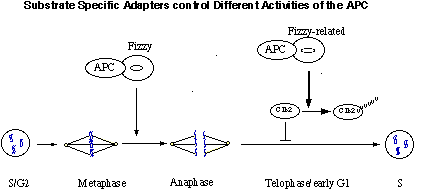
The E3 complex that mediates the destruction of cyclin B is called the Anaphase promoting complex (APC). This complex also destroys other proteins that control the structural events of mitosis, such as chromosome segregation. The specific roles of the APC are mediated by substrate specific adaptors, called fizzy and fizzy-related.
Cdk Inhibitors
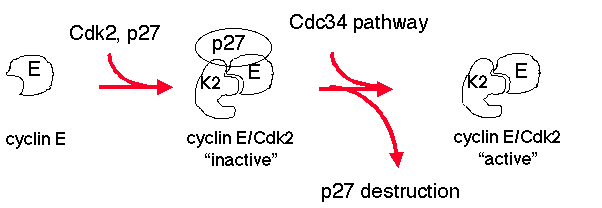
Cyclin-dependent kinases (Cdks) are also regulated by cyclin-dependent kinase inhibitors (CKIs). These proteins bind stoichiometrically to Cdks and block their activity. For cyclin E/Cdk2, the inhibitor is called p27. To activate the Cdk, we also use ubiquitin-dependent proteolysis to remove the inhibitor, using a ubiquitin conjugating enzyme (E2), called Cdc34.
The E2 Cdc34 enzyme associates with another E3 complex, called the SCF complex. In yeast, this complex also uses an adapter protein, much like fizzy, called Cdc4.
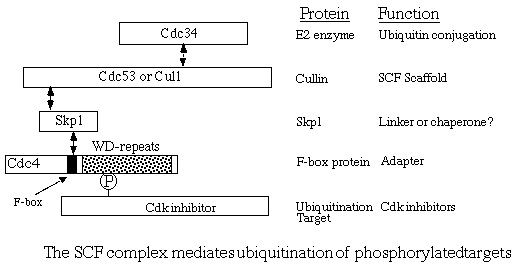
The SCF complex causes the inhibitor of cyclin E/Cdk2, which drives DNA replication, to be destroyed, thus activating replication. So while the APC gets us out of mitosis, the SCF gets us into DNA replication.
So why are these proteolytic complexes important for human disease. In part, because they gate critical events for the stability of the genome, namely, the segregation of the chromosomes and the replication of the chromosomes. For the APC, we know that drugs that block the formation of the mitotic spindle (see Julie Theriot’s lecture), block the activity of the APC and thus block chromosome segregation. Since these drugs are important for chemotherapy, their action on the APC may be important for how the drugs work. For the SCF, we can think of this complex as a thermostat that tells the cell how fast to proceed through the cell cycle and when to replicate the chromosomes. In the model organism, C. elegans, a nematode (worm), mutants in SCF components have hyperplasia, a form of cancer. There is reason to suspect that similar mechanisms may work in humans.
Cyclin D is activated in response to growth factors.
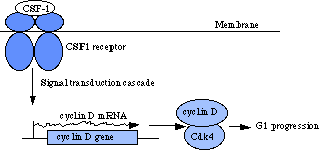 Cyclin D is
For example, in monocytes.
Cyclin D/Cdk4 phosphorylates p105Rb, an inhibitor of G1 transcription
Mutations in each of the components in the cyclin D circuit can cause specific cancers
Mutation Cancer
Homozygous p16 loss - melanoma, esophageal cancer
Homozygous p105Rb - retinoblastoma, osteosarcoma
deletion
cyclin D mutation -parathyroid adenomas, lymphoma, carcinomas (breast, esophagus, gut)
(see Reference: E. Fearon, " Human Cancer Syndromes ", Science 278, 1043-1050, 1997.)